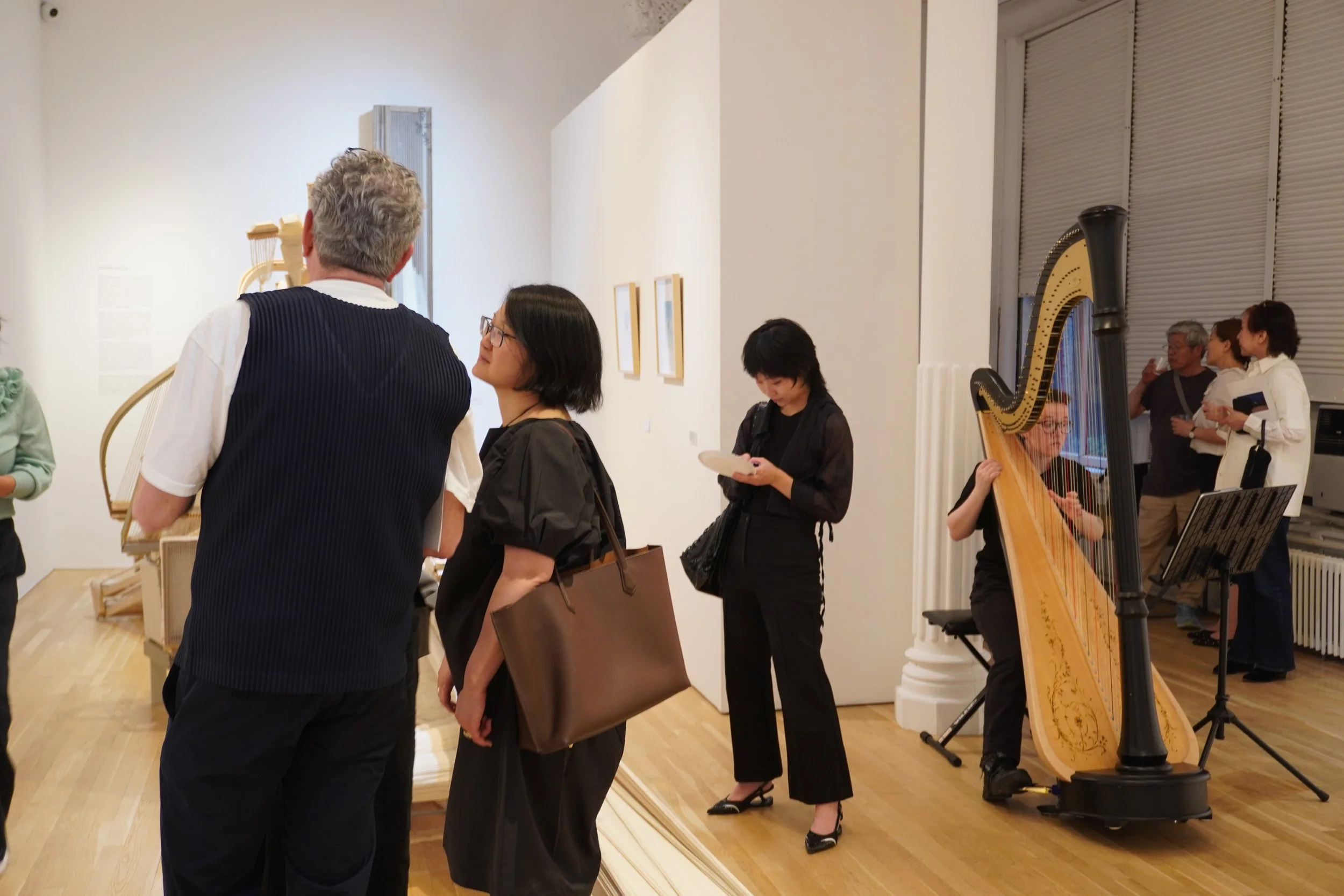
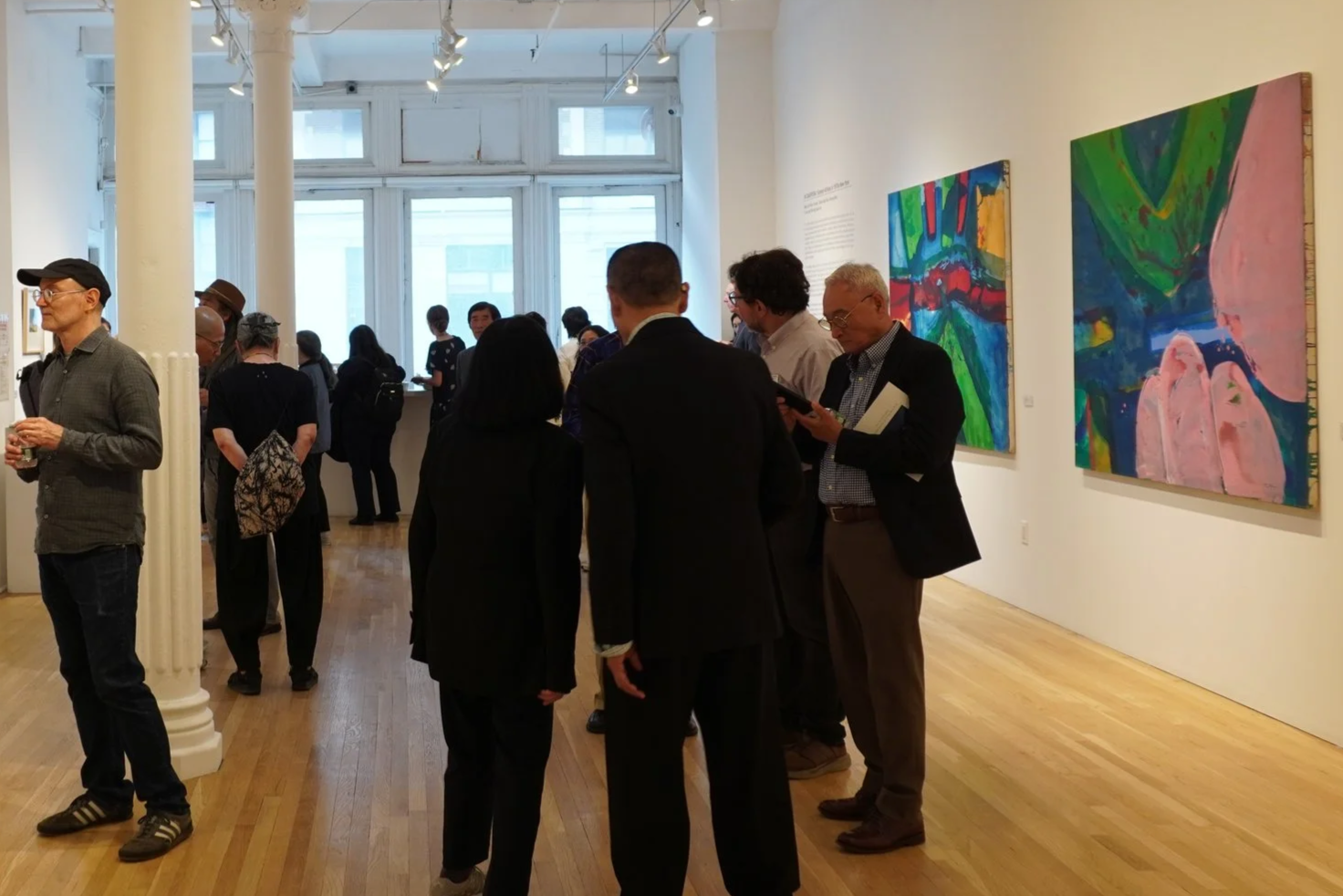
In Diaspora: Korean Artists in 1970s New York
The 1970s marked a pivotal moment in the history of Korean artists working in New York. As the city emerged as the center of the international contemporary art world, artists arriving from Korea encountered new artistic movements, including Abstract Expressionism, Minimalism, Conceptual Art, and post-studio practices. Living between cultures, they navigated questions of identity, memory, and belonging while adapting to an unfamiliar social and artistic environment. Rather than choosing between Korean traditions and Western modernism, these artists forged distinctive visual languages that reflected both their cultural heritage and their experiences of migration.
This exhibition brings together six influential artists, Myong Hi Kim, Po Kim, Tchah Sup Kim, Woong Kim, Il Lee, and Choong Sup Lim, whose practices reveal the diverse ways Korean artists contributed to New York’s dynamic artistic landscape. Working across painting, drawing, sculpture, assemblage, and installation, they transformed the experience of diaspora into a catalyst for experimentation and innovation. Their works engage themes of memory, spirituality, labor, materiality, and cultural translation, demonstrating how artistic expression can emerge from the tensions and possibilities of living between worlds.
Myong Hi Kim addresses migration and memory through layered drawings on reclaimed blackboards, surfaces marked by erasure and renewal that serve as metaphors for displacement and cultural inheritance. Po Kim fused the gestural energy of Abstract Expressionism with the rhythmic sensibility of East Asian calligraphy, creating paintings that balance emotional intensity with meditative reflection.
Tchah Sup Kim developed a distinctive visual language that merged abstraction with symbolic imagery. Drawing from Eastern philosophy, mythology, and personal reflection, his paintings explore themes of transformation, spirituality, and cultural exchange. Woong Kim created contemplative works through repeated layers of oil paint and mixed media, producing subtle textures and tonal variations that emphasize duration, restraint, and lived experience.
Il Lee developed a distinctive abstract language through the accumulation of countless ballpoint pen marks, transforming an everyday writing instrument into a powerful tool for exploring time, movement, and process. His densely layered abstractions create immersive fields of depth and energy, while his later acrylic and oil paintings continue this exploration of line, form, and space through a process-driven approach grounded in experimentation and material sensitivity.
Choong Sup Lim developed an innovative practice that combines painting, sculpture, and installation through stretched fabric, thread, wood, and constructed forms. Built through processes of repetition and accumulation, his works transform simple materials into dynamic spatial structures that evoke memory, labor, and cultural transition.
Together, these artists represent an important chapter in the history of Korean art in America. Their works reveal how migration became a source of creative transformation, generating new forms of abstraction and material exploration while expanding the language of contemporary art. Through their diverse practices, they offer enduring reflections on identity, memory, and belonging, demonstrating how artistic innovation emerges through movement, adaptation, and cultural exchange.
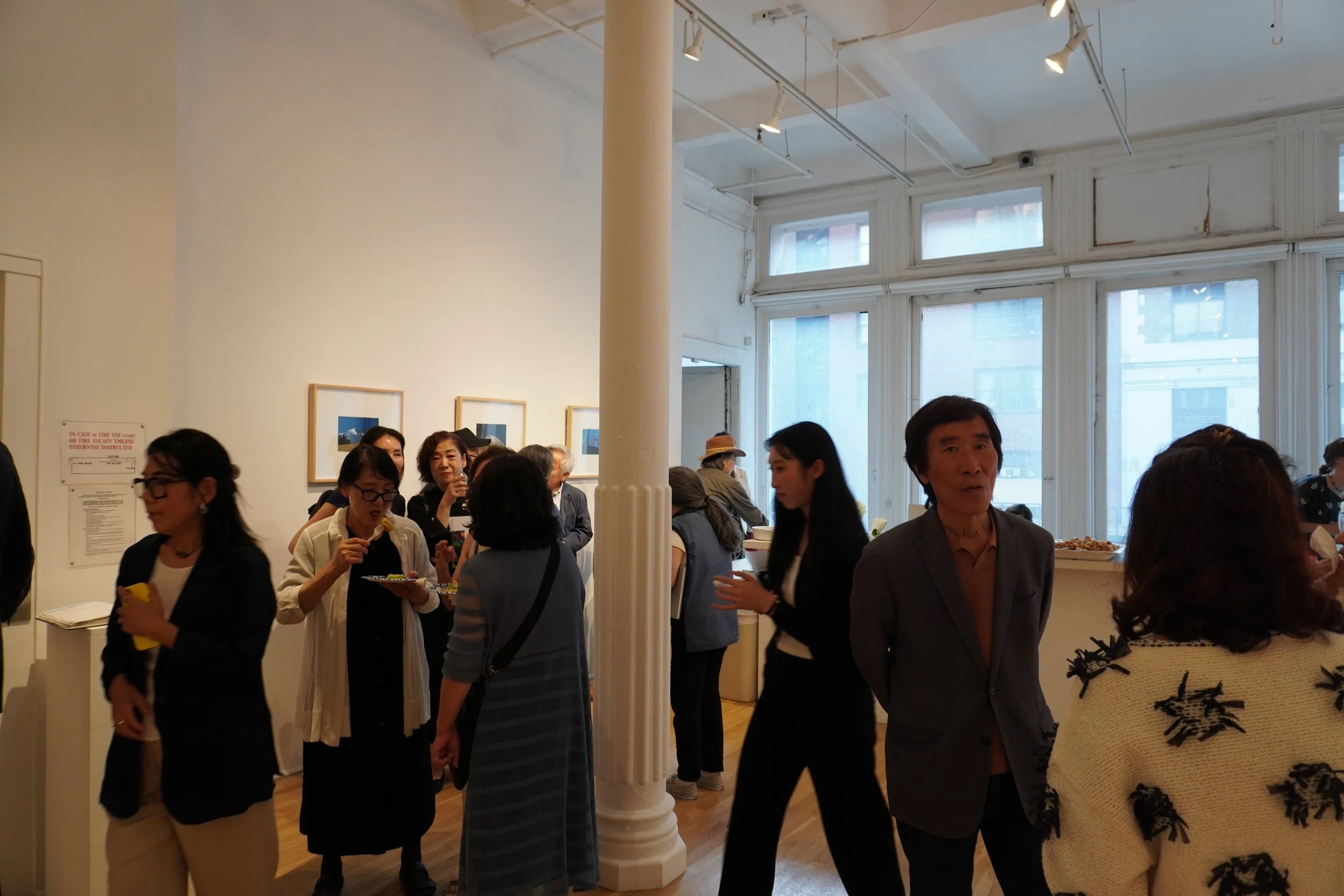
Il Lee (b. 1952)
Born in Seoul in 1952, Il Lee relocated to New York in 1977 and developed a distinctive artistic practice centered on the ballpoint pen. Trained as a painter, he abandoned conventional tools in favor of this everyday instrument, drawn to its flexibility, precision, and ability to produce rich tonal variation. What began as an experimental choice evolved into a signature technique that has defined his work for more than four decades.
Since creating his first ballpoint pen work in 1981, Lee has produced large-scale abstract drawings and paintings built from countless layered lines. Through sweeping, rhythmic gestures, he creates immersive fields that record movement, time, and physical presence. His compositions balance discipline and spontaneity, generating surfaces that appear both energetic and meditative. The accumulation of marks produces a remarkable sense of depth, atmosphere, and spatial ambiguity, inviting viewers into spaces that seem simultaneously expansive and intimate. Rather than depicting recognizable forms, Lee’s works encourage a heightened awareness of gesture, process, and perception.
Deeply process-oriented, Lee embraces the physical properties of his materials, allowing repetition, variation, and chance to shape each work. While best known for his monochromatic black and indigo compositions, he has also explored color through dynamic passages of red and blue. His recent paintings extend his investigations into line, light, form, and space, translating the energy of his drawings into new painterly possibilities. Across both drawing and painting, he continually tests the expressive limits of simple materials, transforming a familiar writing tool into a vehicle for expansive visual experience.
Lee’s work is represented in major museum and public collections worldwide, including The Metropolitan Museum of Art, New York; Los Angeles County Museum of Art (LACMA); Minneapolis Institute of Art; San José Museum of Art; Palm Springs Art Museum; the National Museum of Modern and Contemporary Art, Korea; Leeum Museum of Art; and the Vilcek Foundation. His work continues to demonstrate the transformative potential of line, repetition, and sustained artistic inquiry.
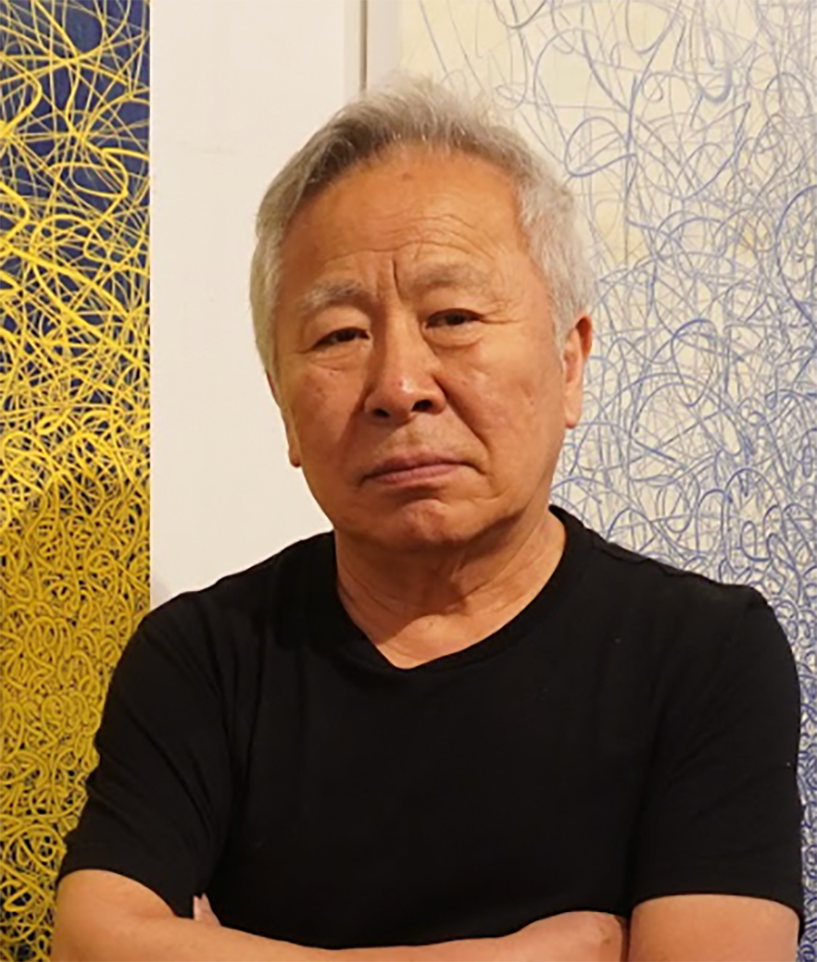
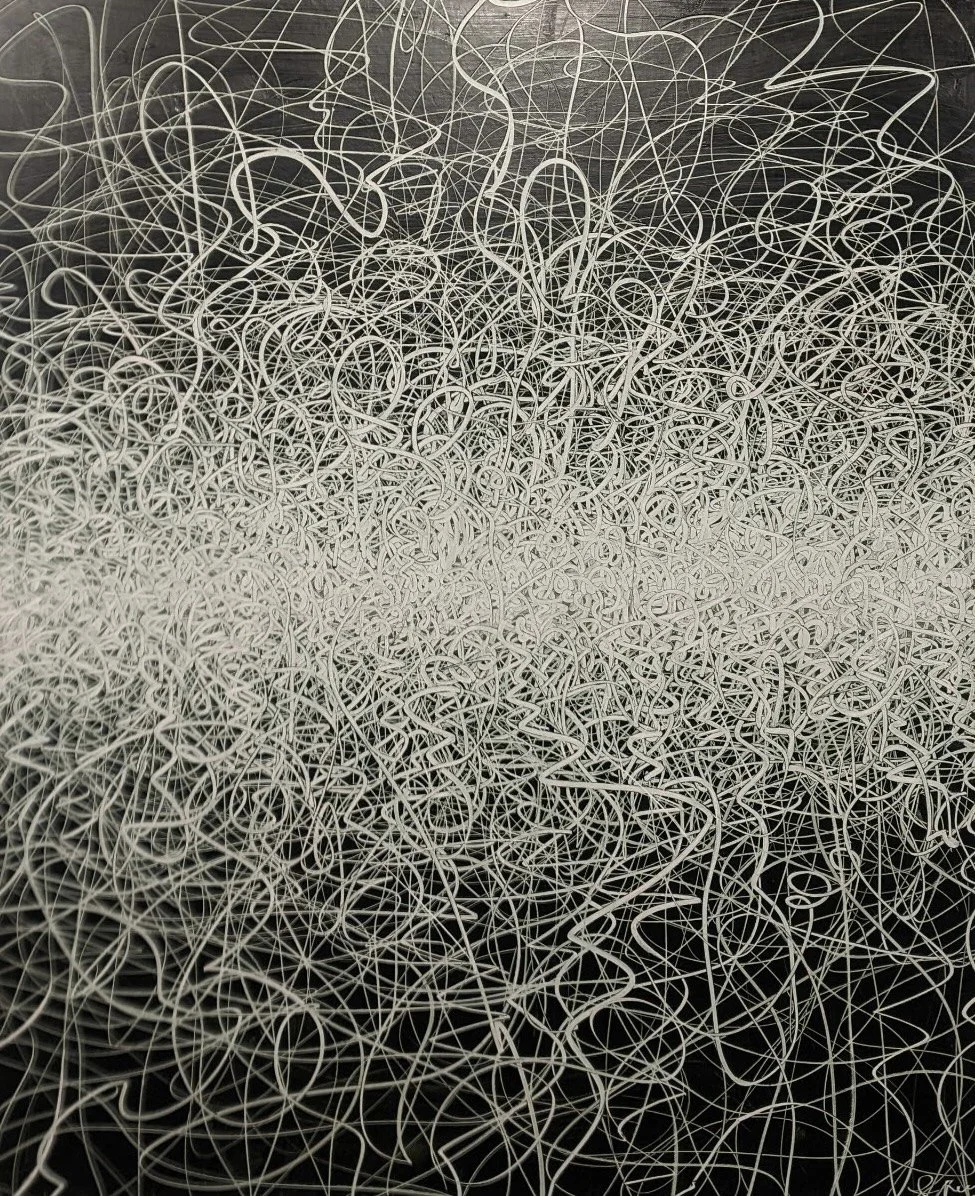
Il Lee, TW - 2502, 2025, Oil and acrylic on canvas, 32 x 27 inches
Courtesy of the artist and Art Projects International, New York
Tchah Sup Kim (b. 1940)
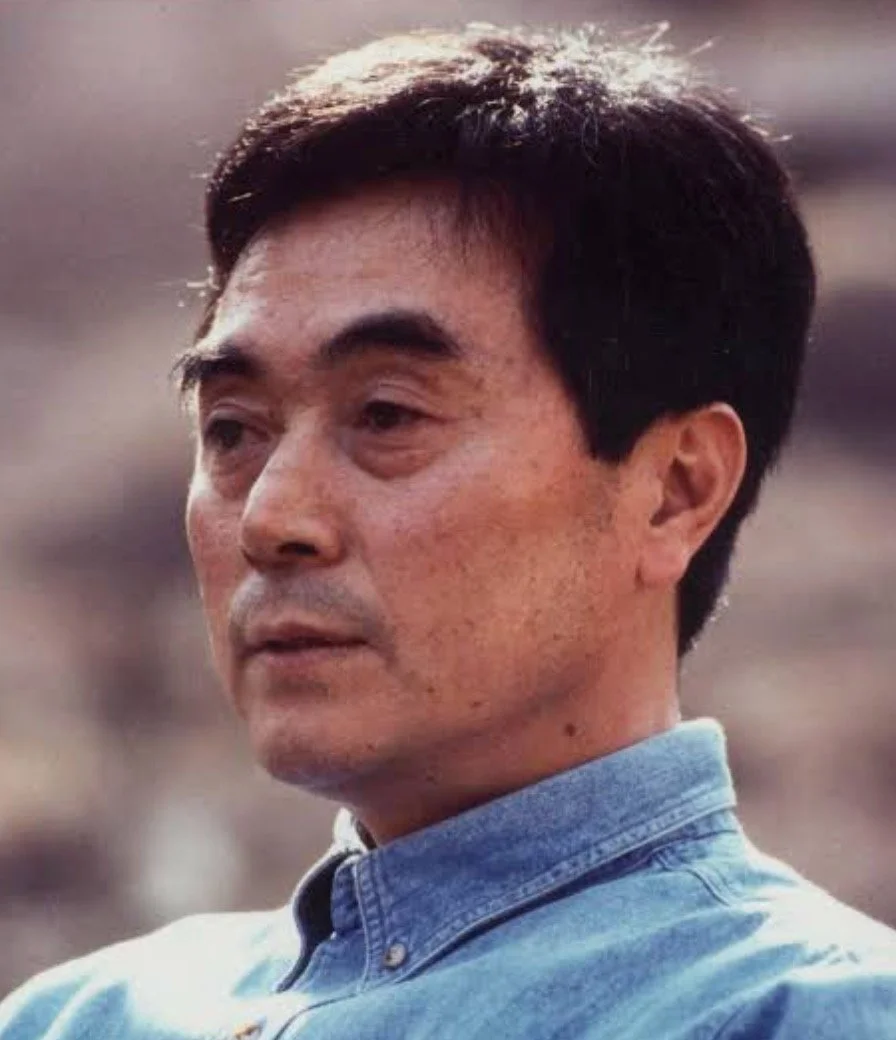
Born in Yamaguchi Prefecture, Japan, Tchah Sup Kim (1940–2022) brought together scientific inquiry, historical consciousness, and cultural memory throughout his artistic practice. Emerging from the geometric and experimental tendencies of Korea’s postwar avant-garde, his early work emphasized structure, abstraction, and conceptual investigation. After coming to New York in 1975, Kim studied printmaking and developed a distinctive body of etchings that reflected both technical rigor and conceptual depth. Working with labor-intensive gravel-field etching processes, he transformed the effects of corrosion, texture, and printing into abstract compositions that explored geometry, perception, and materiality. Triangles and diagonal structures, first developed during this period, became enduring motifs throughout his career.
While studying and working in the United States, Kim engaged with the artistic and intellectual traditions of Western modernism. At the same time, distance from his homeland deepened his interest in cultural heritage and historical origins. Extensive travels throughout Europe, Asia, and the Americas prompted an ongoing examination of migration, geography, civilization, and cultural memory.
During the 1980s, Kim increasingly turned toward expressive and autobiographical imagery, incorporating self-portraits, symbolic forms, and historical references. Following his return to Korea in 1990, he shifted toward more intimate drawings and paintings that fused personal experience with broader cultural narratives. Maps, ancient civilizations, and historical migration became recurring themes through which he explored identity, place, and collective memory.
Across printmaking, drawing, and painting, Kim developed a distinctive visual language that combines geometry, symbolism, and historical reflection. His works are included in the collections of The Museum of Modern Art, New York; The Metropolitan Museum of Art, New York; the Brooklyn Museum, New York; the Harvard Art Museums; and the National Museum of Modern and Contemporary Art, Korea.
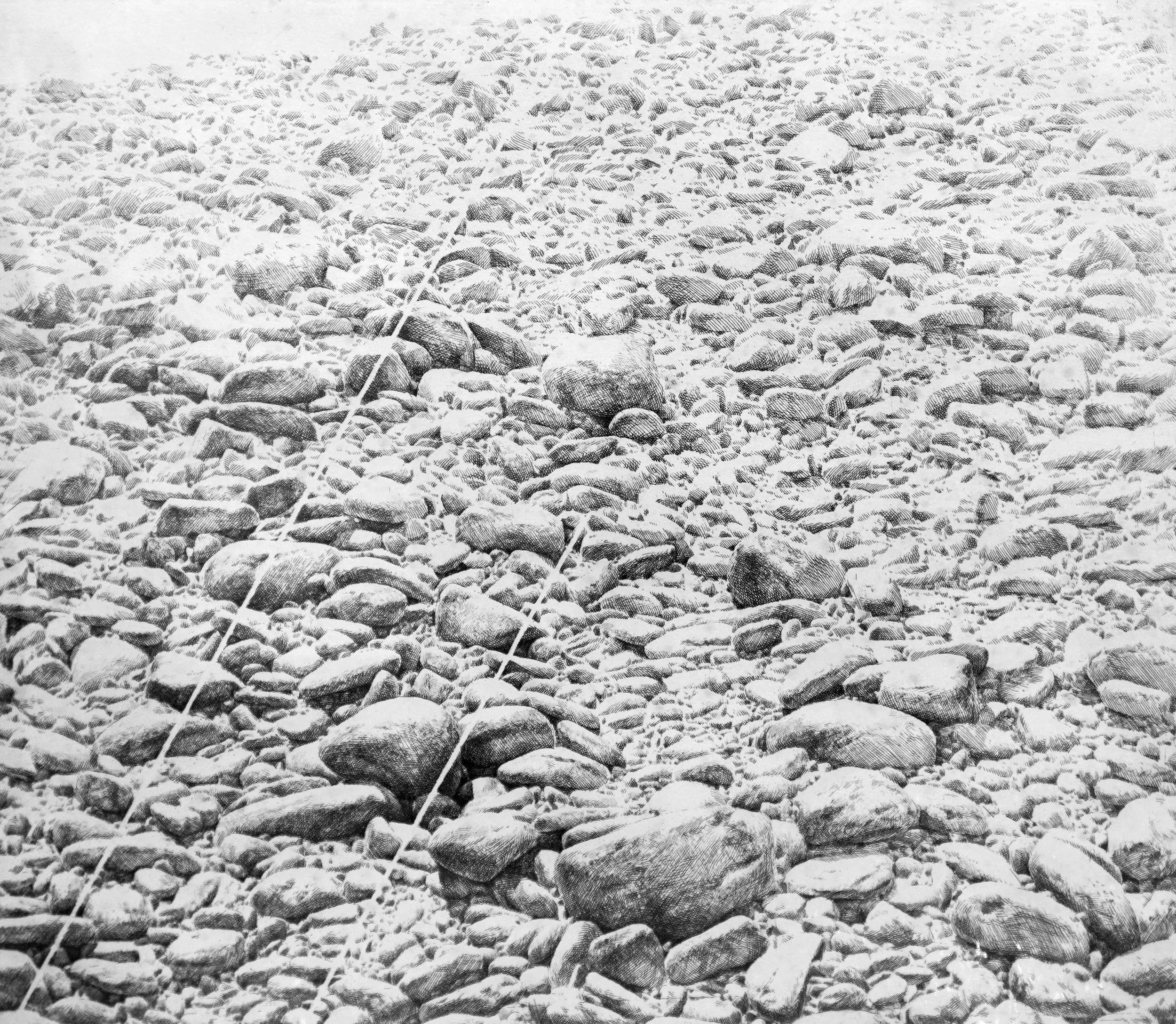
Tchah Sup Kim, Between Infinities (Two Lines), 1978, Copper plate etching, 22 x 25 inches
Po Kim (b. 1917)
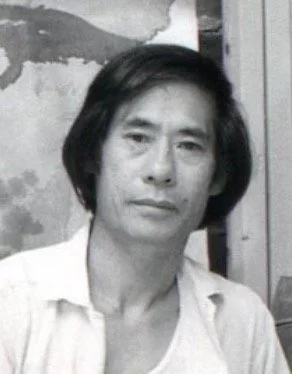
Born in Changnyeong, Korea, Po Kim (1917–2014) was among the first generation of Korean artists to establish a lasting career in the United States. Arriving in New York in 1955, he became one of the earliest Korean artists to live and work permanently in the city. Having received both Western and Eastern artistic training, Kim developed a distinctive visual language that fused diverse traditions while remaining uniquely his own. Throughout a career spanning more than six decades, he explored new approaches to painting and drawing, moving fluidly between abstraction and representation.
Following his arrival in New York, Kim engaged directly with the postwar American avant-garde. His encounter with Abstract Expressionism played an important role in shaping his artistic development. During the late 1950s and 1960s, he produced dynamic abstract paintings characterized by energetic brushwork, luminous color, and a powerful sense of movement. While informed by the artistic climate of New York, his work also drew upon the rhythmic qualities of East Asian calligraphy, resulting in a visual vocabulary that bridged multiple artistic traditions.
A defining characteristic of Kim's career was his willingness to continually reinvent his artistic practice. Throughout his life, he moved between abstraction, realism, and figuration with a freedom that distinguished him from many artists of his generation. These transformations reflected an openness to new artistic possibilities and a sustained commitment to experimentation. Having experienced war, political upheaval, displacement, imprisonment, and personal hardship in his early years, Kim resisted allowing these experiences to define his art. Rather than focusing directly on violence or suffering, he pursued a visual language grounded in imagination, beauty, and renewal. His realist drawings and still lifes of the 1970s demonstrated an intense engagement with observation and the natural world, while from the 1980s onward he developed symbolic figurative compositions populated by human figures, animals, plants, and organic forms.
His works are represented in major public and institutional collections, including the Solomon R. Guggenheim Museum and The Metropolitan Museum of Art, New York; the Art Institute of Chicago; the National Museum of Modern and Contemporary Art, Korea; the Seoul Arts Center; the Gwangju Museum of Art.
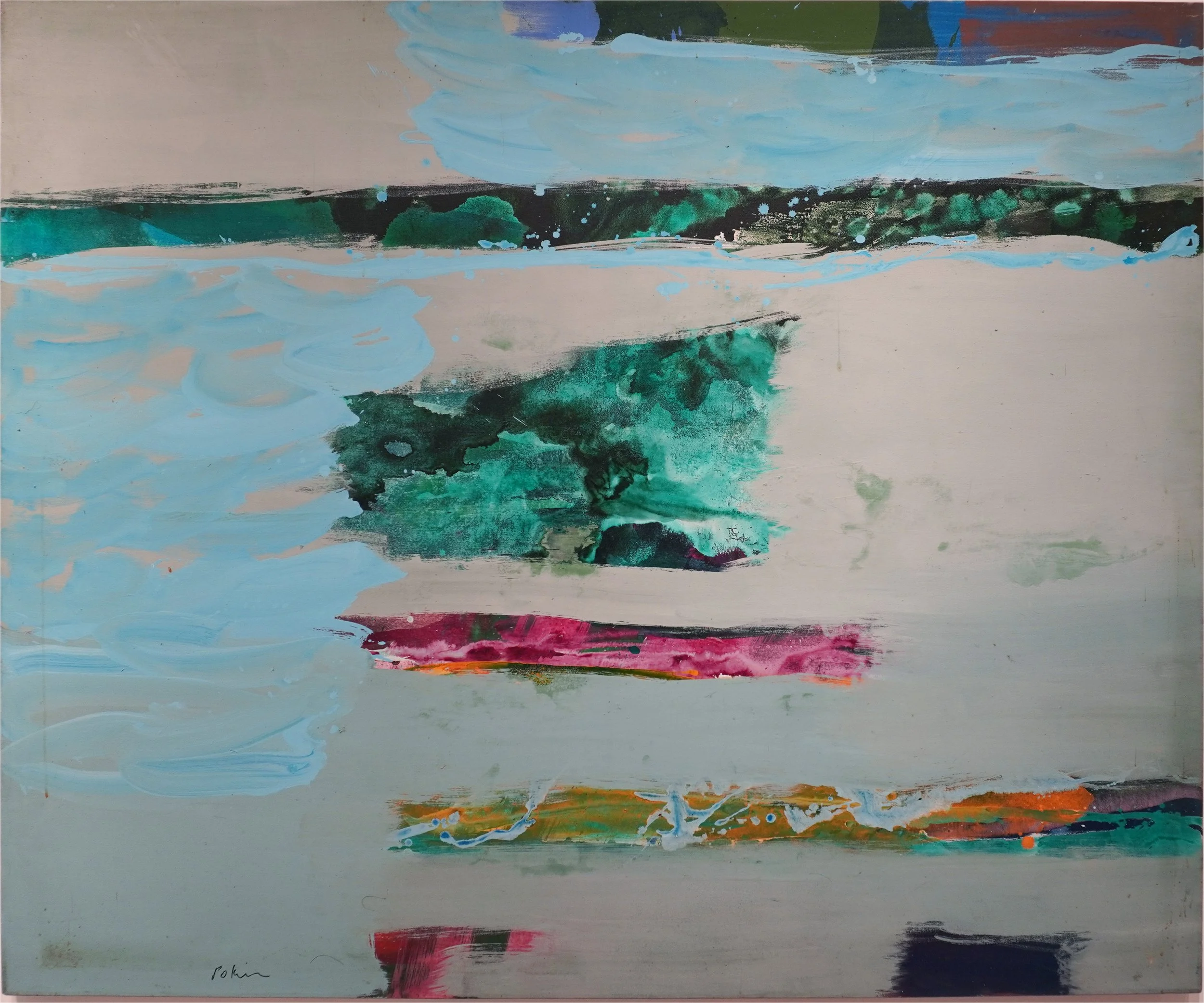
Po Kim, Untitled 1222, 1970, Acrylic on canvas, 60 x 72 inches
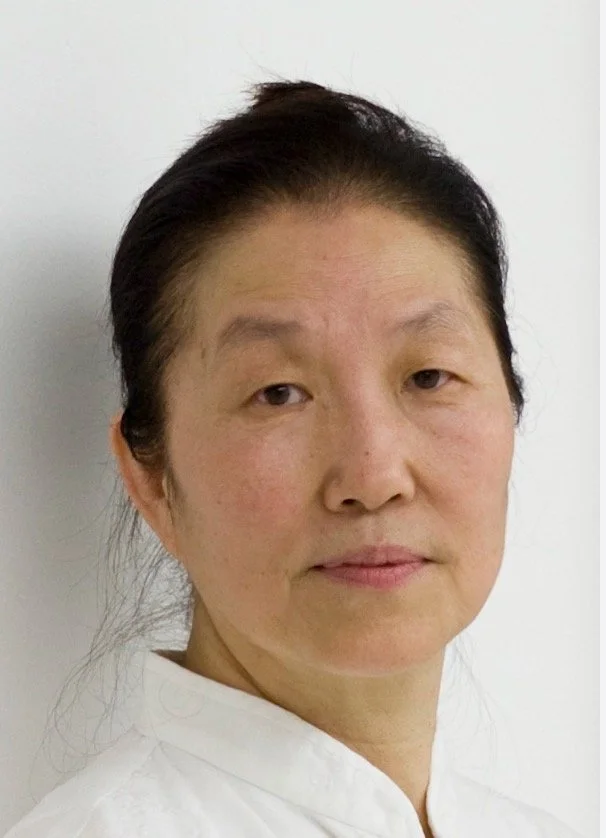
Myong Hi Kim (b. 1949)
Born in Seoul in 1949, Myong Hi Kim’s work explores cultural memory, migration, displacement, and resilience through a deeply personal yet historically grounded lens. After moving to New York in 1976, Kim developed an artistic practice shaped by her experiences living between Korea and New York and by extensive international travel. These experiences fostered a sustained engagement with the ways history, movement, and cultural change shape individual and collective identity.
A pivotal turning point in Kim’s career came in 1990 when she relocated to an abandoned schoolhouse in rural northern South Korea. There she discovered the building’s original chalkboards, which became the foundation of her artistic practice. Once used for instruction, these blackboards now serve as both support and archive, bearing traces of erased lessons, Korean inscriptions, and mathematical notations. By transforming these surfaces into works of art, Kim reveals the fragile relationship between memory and forgetting, presence and absence.
Using oil pastel and chalk on found blackboards, Kim creates evocative images in which figures and forms emerge from deep black surfaces like apparitions. Often recalling children who once occupied the schoolhouse, these works evoke a suspended sense of time where past and present coexist. The physical presence of the chalkboard reinforces themes of disappearance, return, and the persistence of memory.
Through dramatic contrasts of light and shadow, Kim constructs compositions that merge personal experience with collective history. Her landscapes and figures inhabit spaces where memory, myth, and lived experience intersect. While her work acknowledges historical trauma and displacement, it also emphasizes resilience and renewal. Ultimately, Kim’s art suggests that dislocation does not preclude continuity and that history remains open to reinterpretation.
Her work is represented in major public collections, including the National Museum of Contemporary Art, Gwacheon; Whanki Museum, Seoul; National Assembly Collection, Seoul; Ryu Kwan Soon Memorial Theatre, Seoul; Chung Kang College, Icheon-si; and Park Soo Keun Museum, Yanggu.
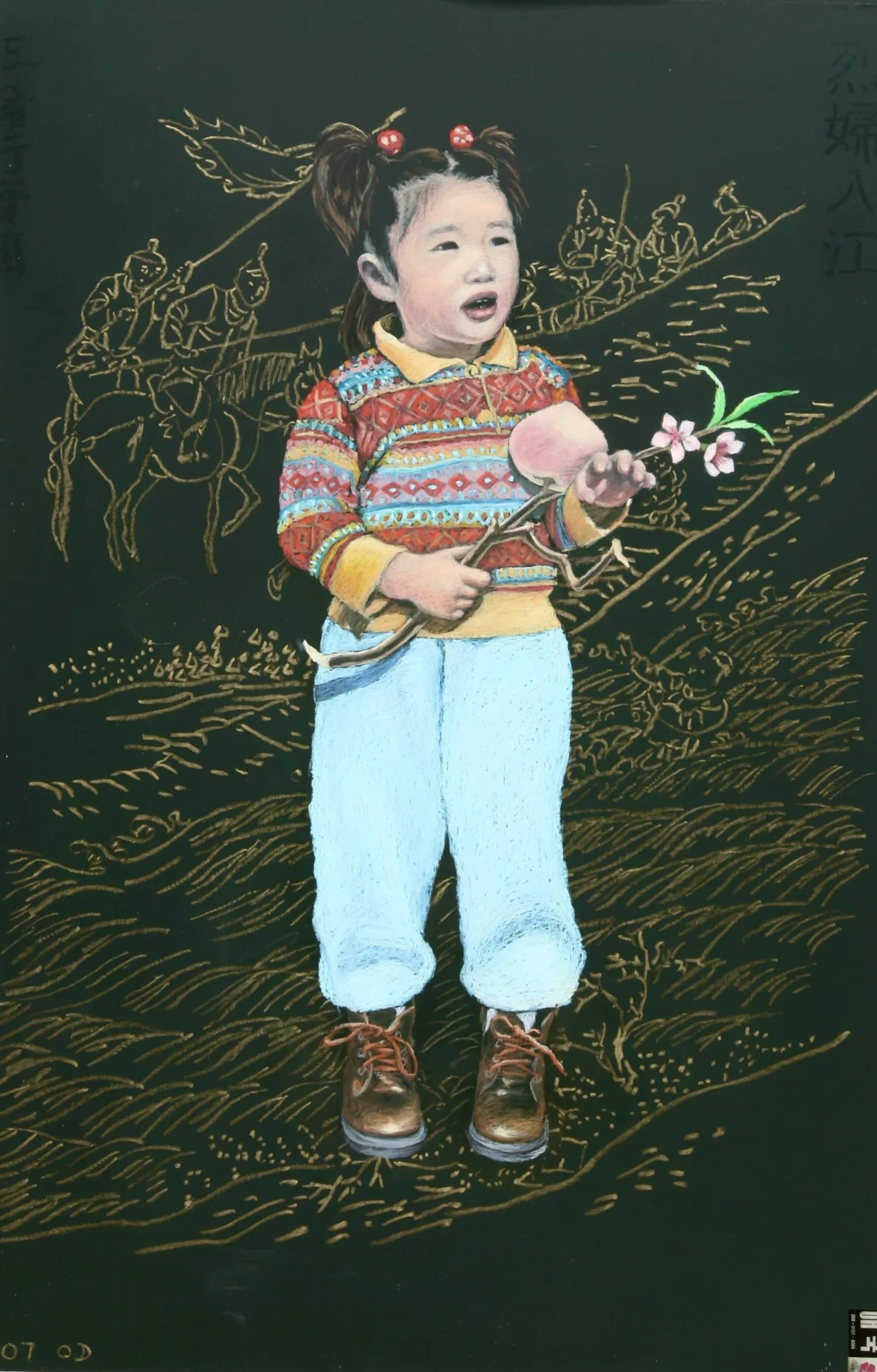
Myong Hi Kim, Dongja with Peach, 2007, Oil pastel on chalkboard, 90 x 60 inches
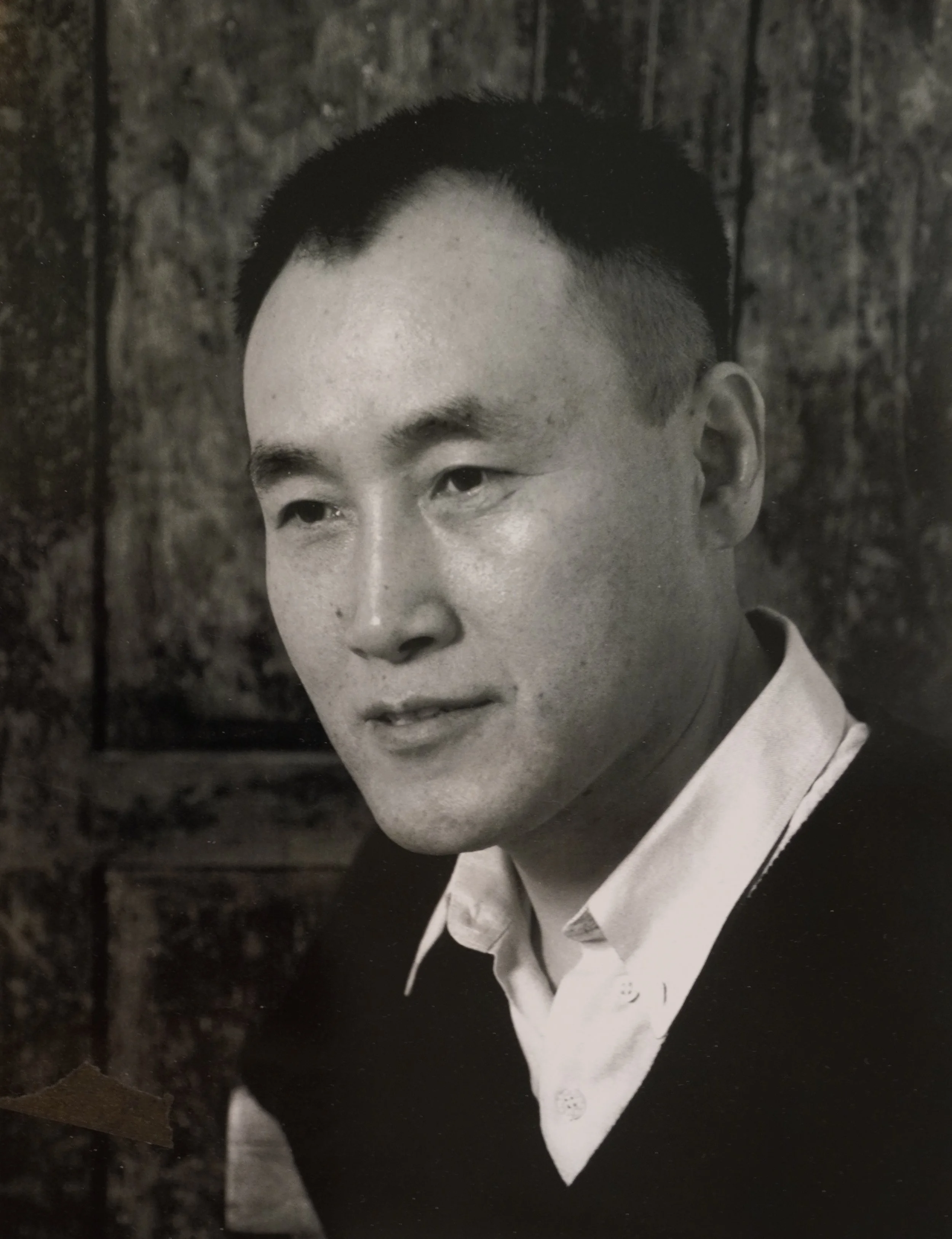
Woong Kim (b. 1944)
Born in Chungcheongnam-do, Korea, in 1944 and based in New York since 1970, Woong Kim has developed a distinctive painting practice shaped by intuition, disciplined observation, and a sustained engagement with material process. Working with oil paint, pencil, and natural pigments, he constructs surfaces through layering, masking, scraping, and overpainting. Each work evolves gradually over time, accumulating traces of action and revision that function as sedimented records of memory and experience.
Raised in the rural landscapes of Korea, Kim absorbed values of clarity, diligence, and attentiveness that continue to inform the contemplative nature of his work. Following his move to New York and studies at Yale University, he developed a visual language grounded not in representation but in process itself. Repetition, patience, and sustained observation became central to a practice in which meaning emerges through the gradual transformation of the painted surface.
Beginning in the 1980s, Kim expanded beyond the reductive principles of Minimalism, embracing a more materially complex approach. Dense accumulations of mark-making, layered color fields, and richly textured surfaces introduced greater depth and spatial ambiguity. Positioned between abstraction and landscape, his paintings evoke terrain, erosion, weathering, and geological stratification without depicting any specific place. Instead, they suggest landscapes remembered, imagined, or felt.
The dynamic interplay of construction and erasure remains fundamental to Kim’s practice. Through the continual addition and removal of material, he creates works that balance order and unpredictability, structure and improvisation. His paintings offer a meditative encounter with memory, place, and time, inviting viewers into a sustained experience of contemplation.
Kim’s work is represented in major public and institutional collections throughout the United States and Korea, including the Yale University Art Gallery; the National Museum of Modern and Contemporary Art, Seoul; the Seoul Museum of Art; the Seoul National University Museum; the Kumho Museum of Art; the Sungkok Art Museum; and the Permanent Mission of the Republic of Korea to the United Nations, New York.
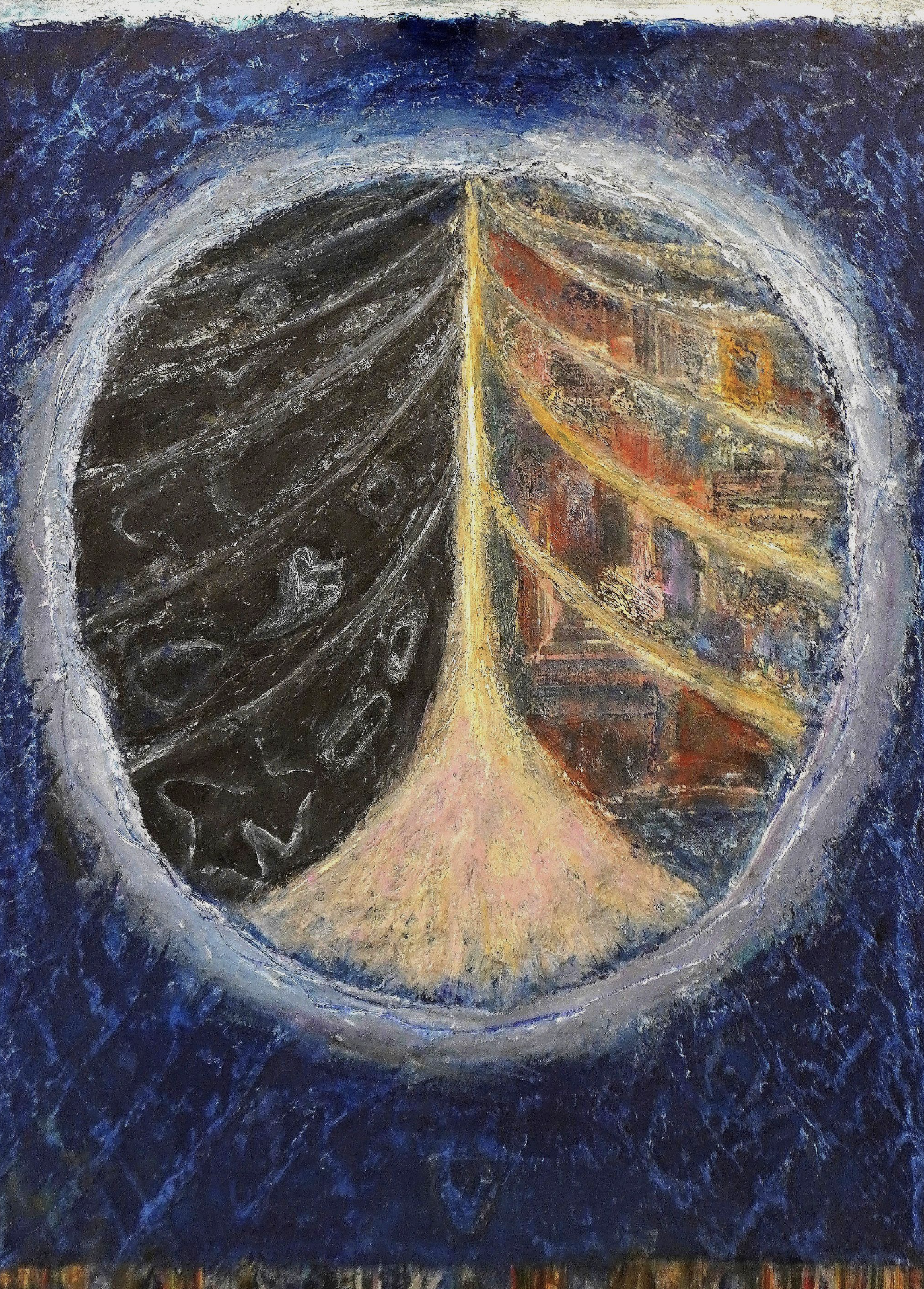
Woong Kim, Untitled Series 26-3, 2026, Oil and mixed media on canvas, 20 x 16 inches
Choong Sup Lim (b. 1941)
Born in Jincheon, Korea, in 1941 and based in New York since 1973, Choong Sup Lim is a multidisciplinary artist whose practice spans drawing, painting, sculpture, assemblage, and installation. Over the course of more than five decades, he has developed a distinctive visual language rooted in process, memory, and material transformation. Moving to New York at a pivotal moment in contemporary art, Lim encountered minimalism, conceptual art, and post-minimalist practices, influences that expanded his artistic approach while deepening his engagement with his Korean cultural heritage.
Central to Lim’s work is an open-ended process of making. Rather than beginning with a predetermined image, he allows forms to emerge through repetition, layering, erasure, accumulation, and reconstruction. Found objects, calligraphic marks, monochromatic surfaces, and sculptural interventions coexist within works that blur the boundaries between painting and sculpture. His practice is guided by an attentiveness to material behavior and the evolving relationships between objects, marks, and space.
Memory plays a fundamental role in Lim’s artistic vision. Experiences from his childhood in rural Jincheon, including the rhythms of agricultural life, personal loss, and the passage of time, surface indirectly through materials and gestures. Influenced by Confucian, Taoist, and Buddhist thought, his work embraces impermanence, interdependence, and continual transformation. These ideas inform works that remain open, fluid, and responsive to change, allowing meaning to emerge through process rather than fixed narrative.
Lim’s works are held in numerous public and private collections worldwide, including The Metropolitan Museum of Art, New York; the Hirshhorn Museum and Sculpture Garden, Smithsonian Institution; Leeum Museum of Art; the National Museum of Modern and Contemporary Art, Korea; the National Gallery of Australia; and other major institutions across Asia, Europe, Australia, and the United States.
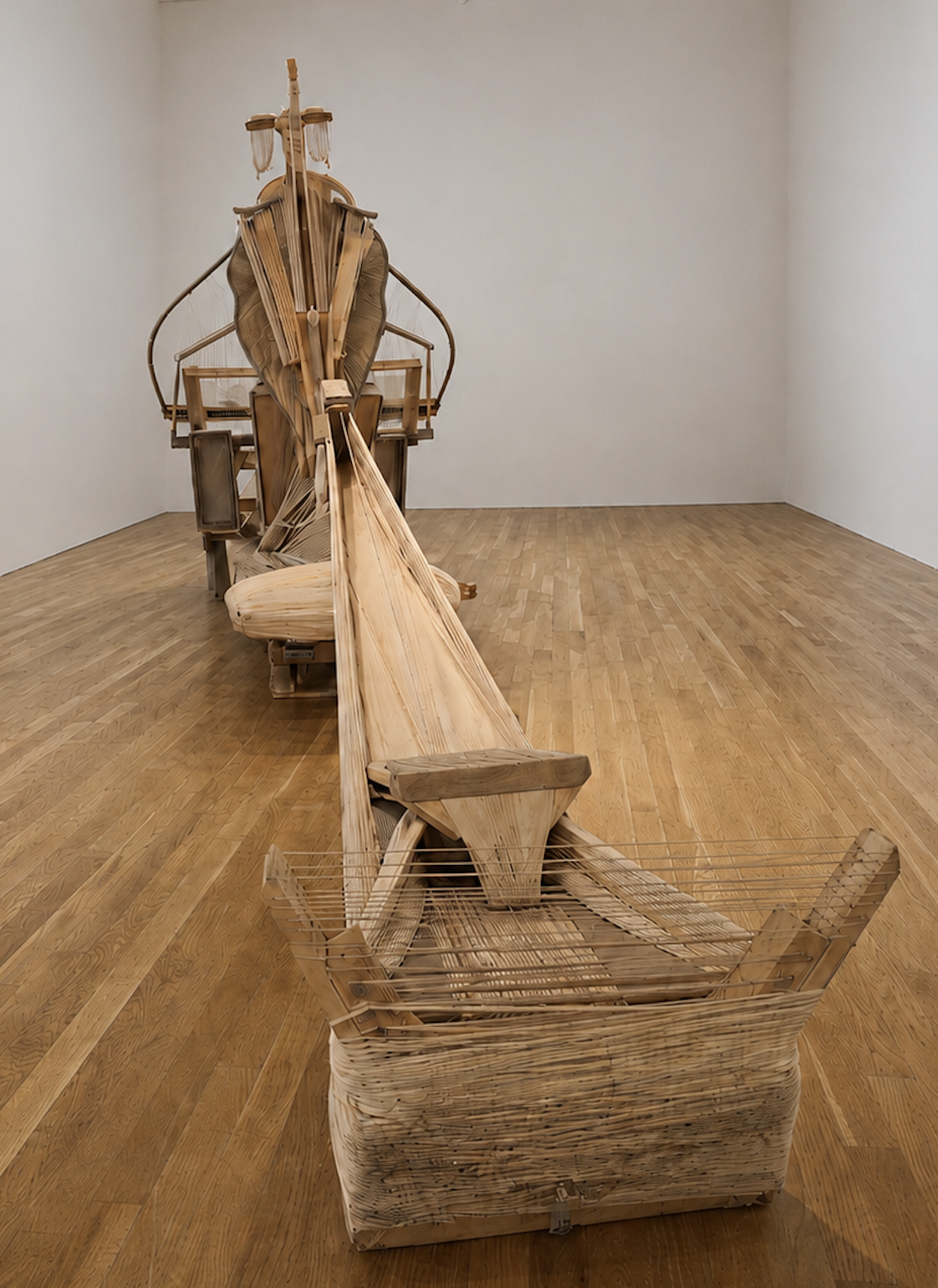
Choong Sup Lim, Gil-ssam, 2000-2006, Natural Korean cotton threads, wood, oil paint, acrylic, and U.V.L.S. gel, 30 x 200 inches